
French Municipal Elections: A Simple Guide for English-Speaking Residents
French municipal elections (élections municipales) decide who runs your local commune for the next six years. They are among the most important elections in France because they affect daily life: local taxes, planning decisions, schools, roads, village services, and community life.
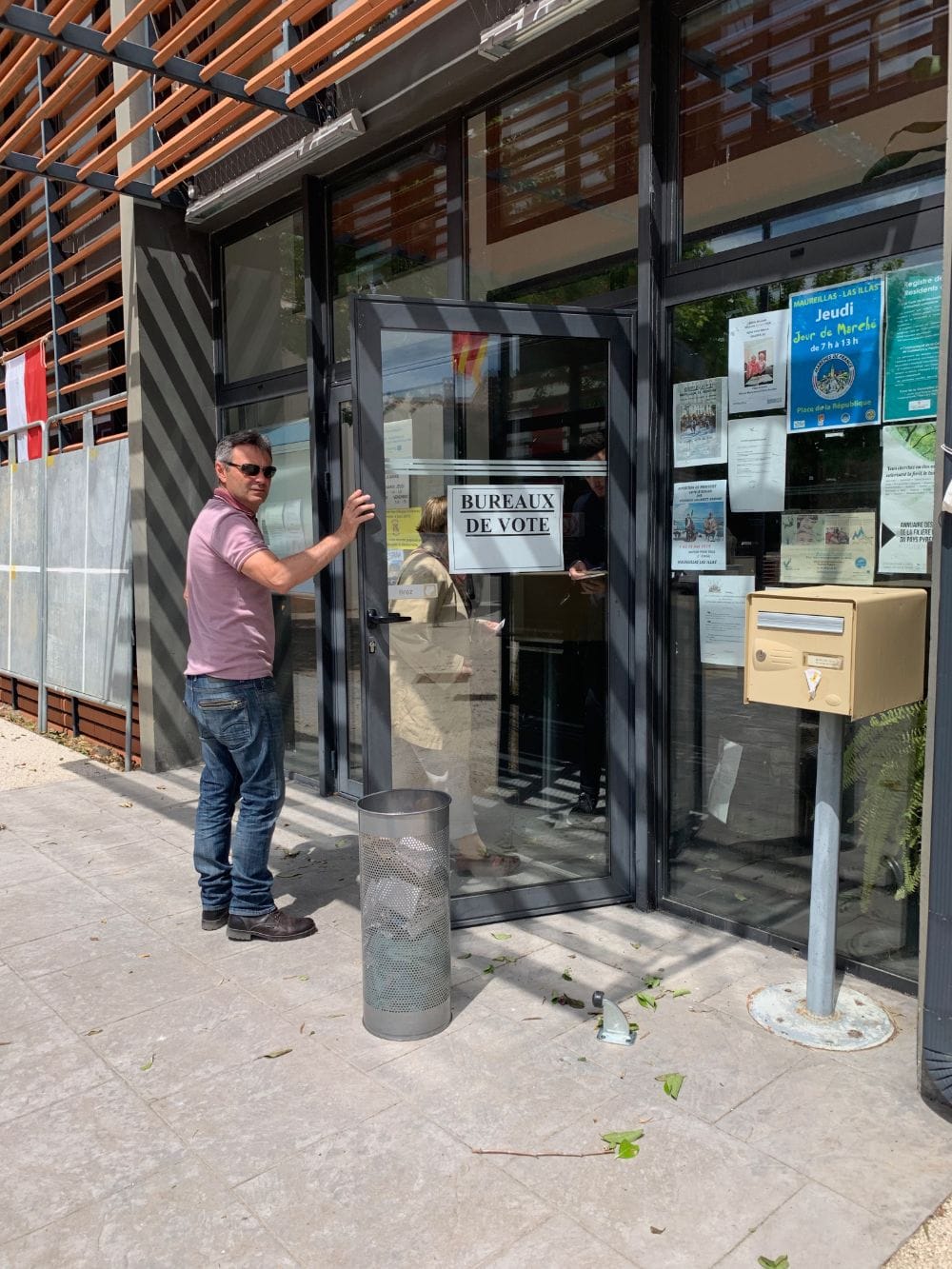
For foreign residents, these elections can seem confusing — but with a little background, they are much easier to understand.
When Are the Next Elections?
- Sunday 15 March 2026 (first round)
- Sunday 22 March 2026 (second round, if needed)
Voting in France always takes place on a Sunday.
Who Can Vote?
You can vote in municipal elections if you:
- Are 18 or over
- Are registered on the electoral roll (listes électorales) of your commune
- Are either a French citizen, or a citizen of another European Union country living in Franc
NON-EU CITIZENS CANNOT VOTE IN ANY FRENCH ELECTIONS.
Important Brexit Note
Since Brexit, British citizens are no longer allowed to vote in French municipal elections, even if they have lived in France for many years. Most British residents were automatically removed from the electoral roll.
When Do Municipal Elections Take Place?
- Every six years
- Usually held over two Sundays (two rounds)
- Polling stations are generally open from 8am to 6pm or 7pm, depending on the size of the commune
If a list or candidate wins outright in the first round, there may be no second round.
Where and How Do You Vote?
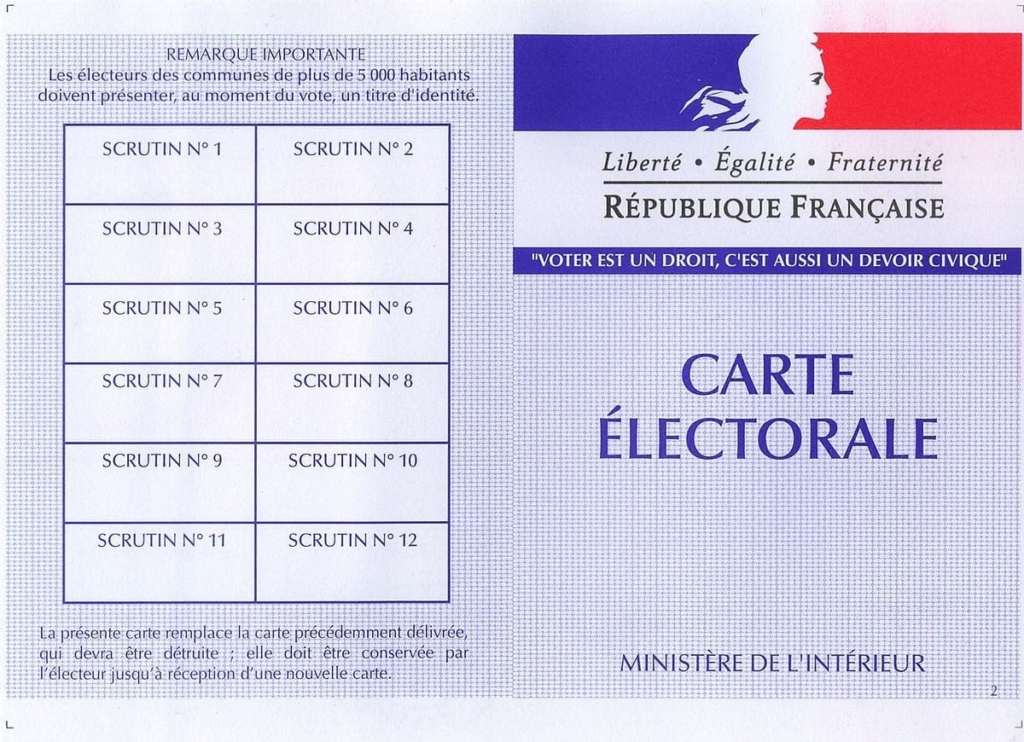
Registration Is Not Automatic. Being resident in France, paying local taxes, or holding a residence permit does not register you to vote. Eligible voters must register separately on the electoral roll of their commune, usually at the mairie or online. Registration deadlines are normally in early February before the election year.
Voting takes place at your local mairie or designated polling station. You should bring:
- Your carte électorale (if you have one)
- A valid photo ID
How Does Voting Work?
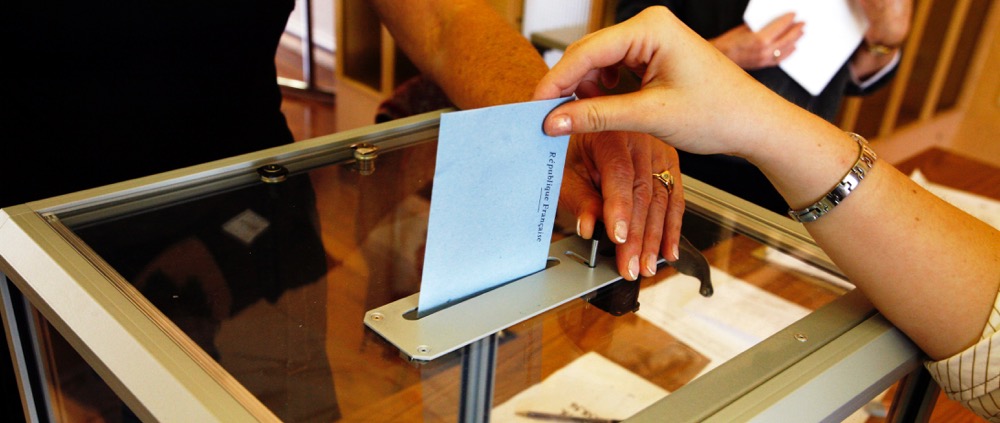
- Select a paper ballot ( un bulletin)
- Place it in an envelope
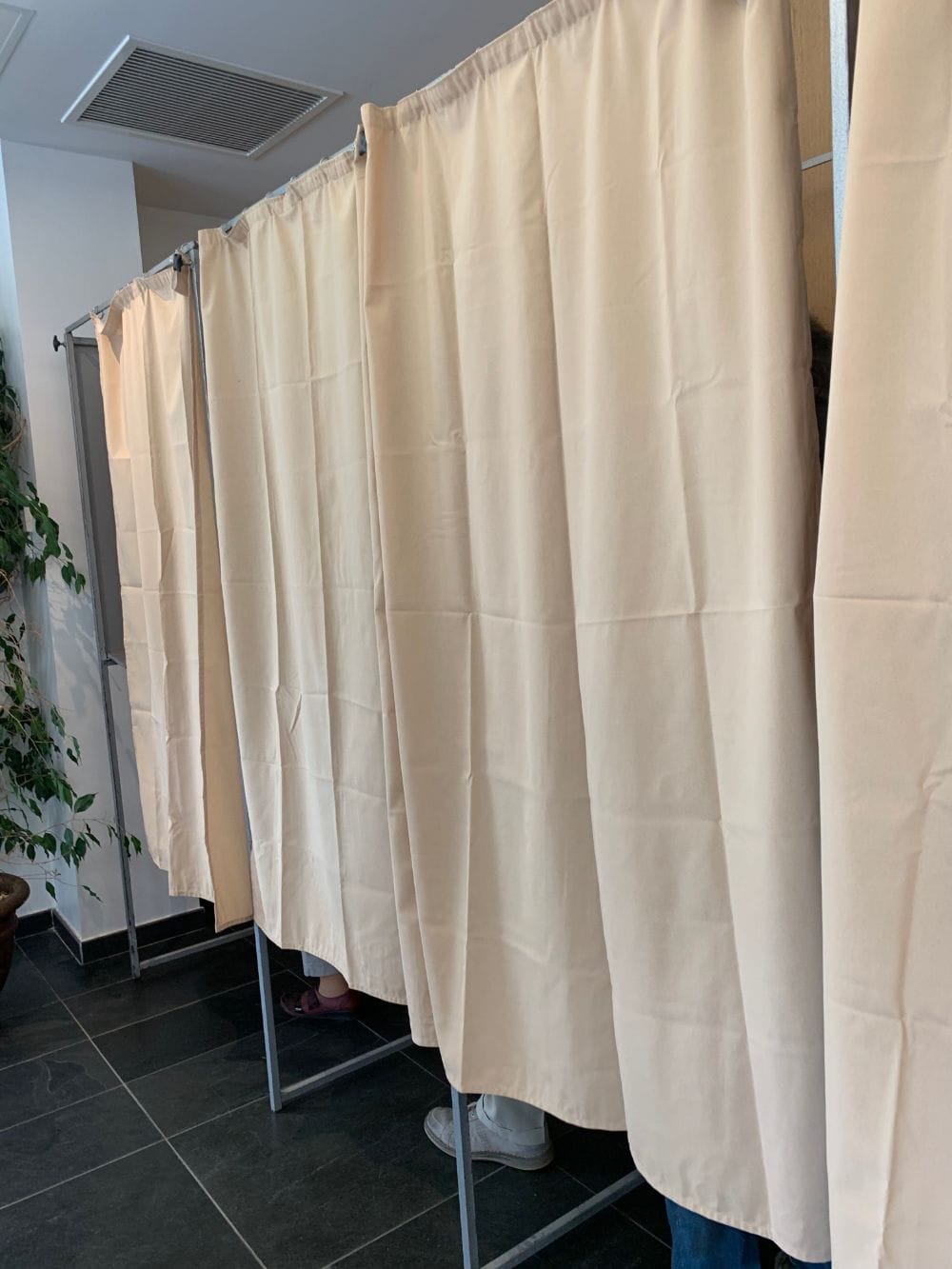
- Go behind a curtain (isoloir)
- Place the envelope in the ballot box
- You may hear the official declaration: “A voté !”
Proxy Voting
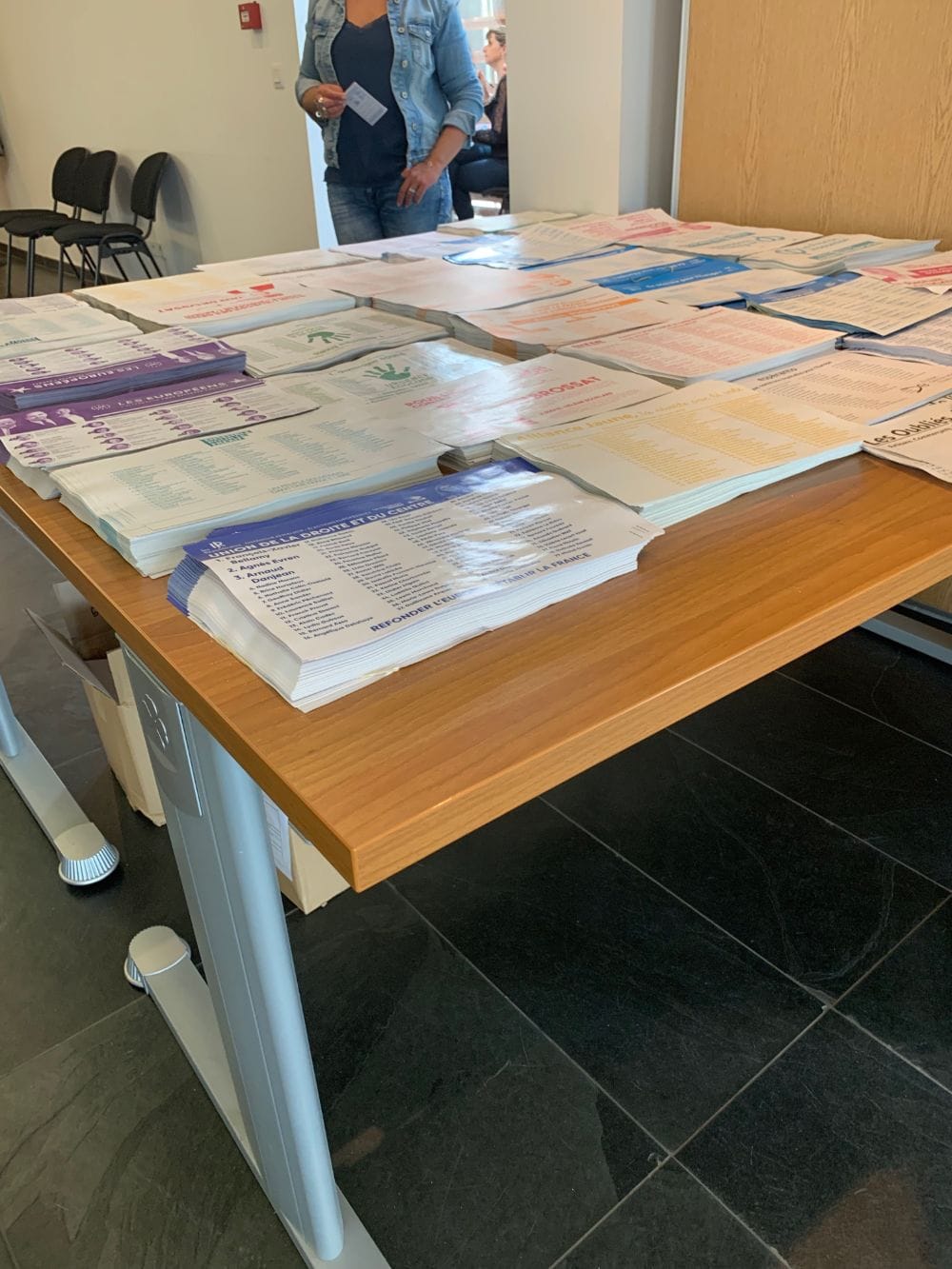
You can either put the original list unchanged into the voting box, or make changes as desired. You can put more than one list into the ballot box, provided that you have not left more names than seats: any such vote would be disqualified.
If a single list is put in the ballot-box, which has more names added to it than there are seats, the vote will not be disqualified, but any supernumerary names (counting from the bottom upwards) will be not be taken into consideration.
How Municipal Councils Work
The Conseil Municipal
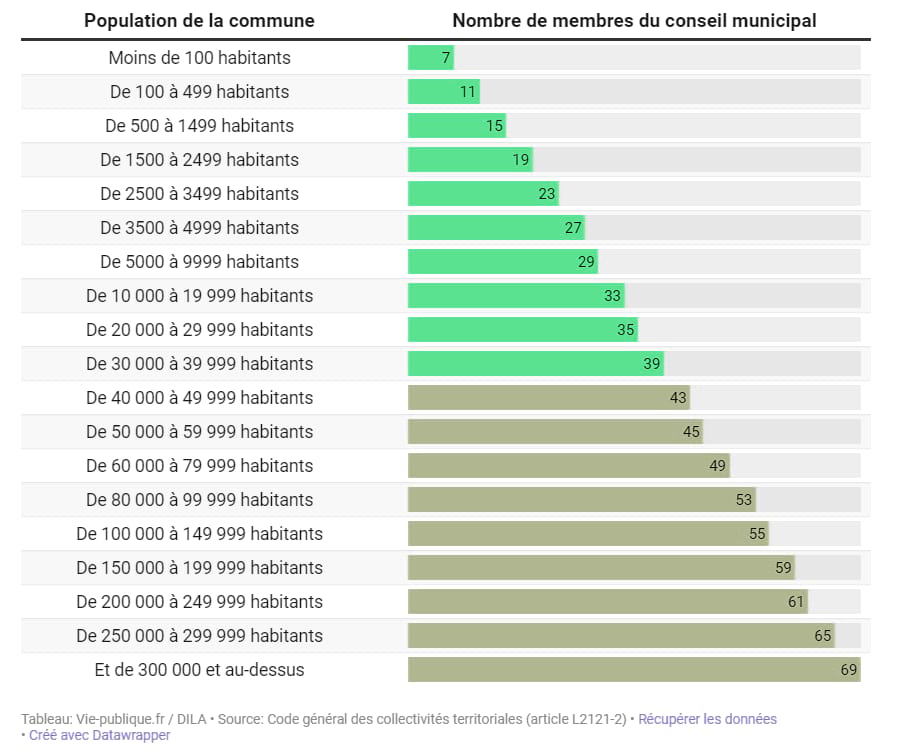
Each commune has a municipal council, made up of councillors (conseillers municipaux). The number of seats depends on the size of the population. Voters elect the council — not the mayor directly.
How the Mayor Is Chosen
After the election the newly elected council meets to elect the maire (mayor) from among themselves. This is called scrutin indirect (indirect election)
In the first two rounds, the mayor must obtain an absolute majority. If necessary, a third round can be decided by relative majority.
The council also appoints adjoints (deputy mayors), each responsible for specific areas (finance, works, culture, etc.).
Different Rules for Different Sized Communes
Editor’s Note (updated February 2026):
An earlier version of this article described the traditional voting system used in municipalities with fewer than 1,000 inhabitants. However, following a decree published in the Official Journal on 28 August 2025, this system has been reformed.
From the March 2026 municipal elections, all communes — including those under 1,000 residents — will use a proportional list system with mandatory gender parity. Individual candidacies and “panachage” (the ability to cross out or add names) have been abolished. Ballot papers that alter candidate names will now be declared void.
The article has been amended accordingly.
Updated rules for municipalities with fewer than 1,000 inhabitants
Until now, in communes with fewer than 1,000 inhabitants, councillors were elected by a majority, multi-member ballot system that allowed “panachage” — meaning voters could cross out names, mix candidates from different groupings, or add individuals standing alone. Votes were counted individually by candidate.
From 2026 onwards, this will no longer apply.
Following a decree published in the Official Journal on 28 August 2025 (Directorate of Legal and Administrative Information, Prime Minister), all municipalities — including those with fewer than 1,000 residents — will now use the same proportional list system used in larger towns.
This means:
- Only full lists of candidates may stand (no more individual candidacies).
- Lists must respect strict gender parity, alternating woman/man or man/woman.
- “Panachage” is abolished: voters may no longer add, remove or rearrange names.
- Any ballot paper on which a name has been altered will be declared void.
The reform was introduced because the previous system in smaller communes did not guarantee gender parity in municipal councils.
The number of seats on a council relates to the size of the population, as set out in the following table:
Communes of 1,000 Inhabitants or More
Voting is done using complete lists
- Lists must respect gender parity (equal numbers of men and women, alternating)
- Seats are allocated using a two-round proportional system with a majority bonus
- If one list wins an absolute majority in the first round, it receives half the seats automatically, with the rest shared proportionally.
The Parity Law (Gender Equality)
French law requires equal representation of men and women on electoral lists in larger communes.
Put forward in 2000, and reinforced in 2007, the Parity Law was introduced to encourage the representation of women in politics, with the aim of achieving ‘parity’ between men and women. In the 2001 municipal elections, lists in communes of over 3500 inhabitants had to contain equal numbers of male and female candidates, but they had to be grouped in clusters of 6, containing three of each in any order: this was to stop all the women being put at the bottom of this list!
A more recent law passed in January 2007 stipulates that the lists must be composed of alternating male and female candidates, rather than the previous clusters of 6, and the executive bodies of these councils must also respect the rules of gender parity.
Neither law applies to communes of under 1000 inhabitants, where there is still a male domination in municipal councils, though some maires are tying to include more women in order to respect the spirit of this law.
If you are already known in the community and have reasonable French, you may well be asked to join a list, especially if you are a woman.
Can Foreign EU Residents Stand for Election?
Yes. EU citizens (non-French) may:
- Vote in municipal elections
- Stand as municipal councillors
- Become deputy mayors
However, they cannot become mayor.
In small villages, councils often struggle to find enough candidates, and EU residents who are well integrated and speak French are often welcomed.
Getting Involved Locally (Even If You Can’t Vote)
Even if you cannot vote, you can:
- Attend municipal council meetings (open to the public)
- Follow notices posted outside the mairie
- Get involved in local associations
- Speak to neighbours and councillors
Here In the P-O, many communes are small and close-knit, and municipal elections often focus on very local concerns — tourism, agriculture, water resources and village life. Whether in Perpignan, Prades, Céret or a small mountain village, the mayor plays a key role in shaping everyday life.
Some Useful Vocab
French term | English meaning |
|---|---|
Le scrutin | Ballot |
Le/la maire | Mayor |
Le conseil municipal | Municipal council |
L’adjoint au maire | Deputy mayor |
Les listes électorales | Electoral roll |
Un bureau de vote | Polling station |
Le premier tour | First round |
Le second tour | Second round |
Une procuration | Proxy vote |
A voté ! | Has voted! |
un isoloir | Booth |
le dépouillement | Counting of the votes |
Le quinquennat | 5 year term |
sortant | outgoing |
fort/faible taux de participation électorale | high/low turnout |
L’urne | ballot box |
le vote blanc/nul | blank vote |
arriver en tête | to be top candidate |
obtenir le même nombre de voix | to tie |
Further details at |
The law has recently changed! You are providing incorrect info. 😢
https://www.service-public.gouv.fr/particuliers/actualites/A18432?lang=en
“In municipalities with less than 1,000 inhabitants..
Now, if you add or delete the name of at least one candidate on your ballot, it will be considered void. The same will apply if you change the order of the candidates.”
Thank you Katja. We have checked and updated the article.
Kate, I believed that panachage is no longer legal and a quick check on Gemini confirmed this.
Thank you Nick. Will check it out and adapt article
Hi again Nick.
According to my research, panachage is still legal, but only in communes with fewer than 1,000 inhabitants.
Since the 2013 reform of municipal elections, communes with 1,000 inhabitants or more use closed lists with no panachage — voters cannot cross off, add, or mix names there. Happy to be corrected if you can provide me with a reliable source.