
Perched high on their unbelievable mountainous rocky outcrops, the castles of Queribus and Peyrepertuse dominate the beautiful rolling vineyards of Maury and Cucugnan.
Take the D117 from Estagel towards Maury and turn off right on the D69 towards Mas Amiel.
Well worth a visit for the sight of the thousands of glass “bonbonnes” full of naturally sweet wine beginning its long development in the 260days of sunshine enjoyed at Mas Amiel each year.
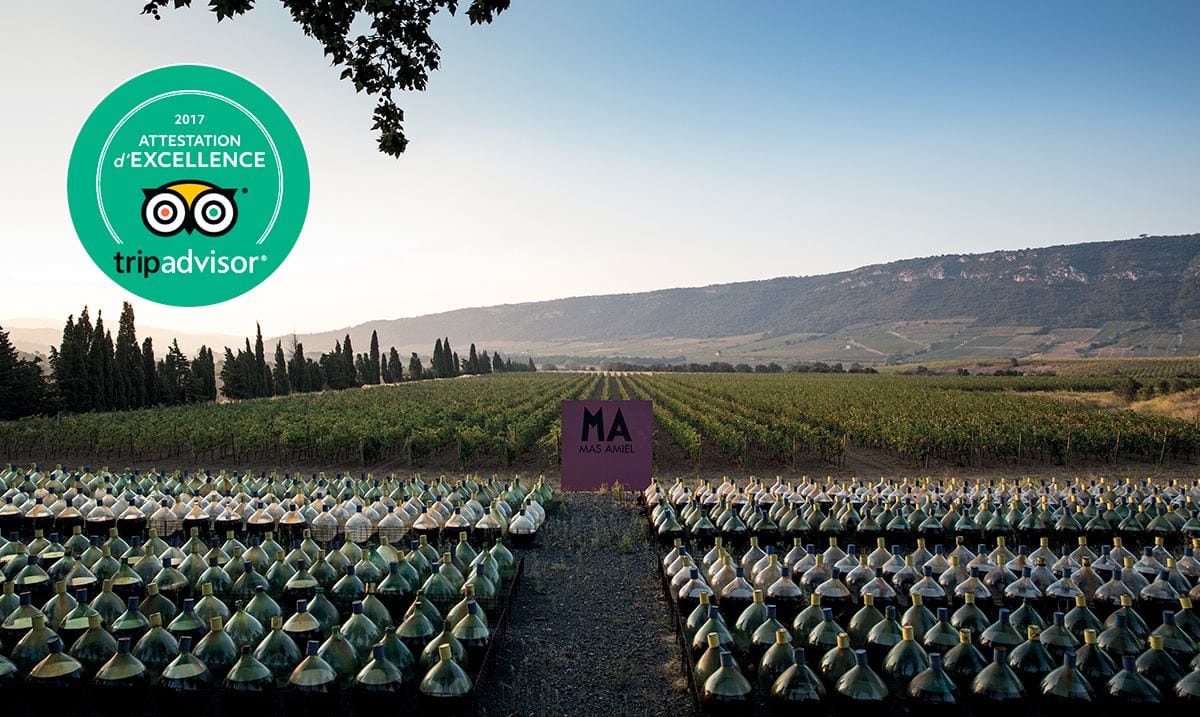
At the beginning of June the wine is racked into glass demijohns, placed outside in the open air in an area containing one thousand 60-litre demijohn, and left for 12 months. The rays of the sun and extreme temperatures make a unique and traditional method of ageing.
Two centuries ago Raymond Etienne Amiel won the 80 hectare property from the then Bishop of Perpignan at a game of cards. Now its sunbaked, windswept terrain produces some of the best Roussillon wines of the Region.
In Maury turn left on the D19 direction Cucugnan and climb through almost lunar landscape till Chateau de Queribus appears on the right, built on its 728m high rocky pinnacle in the XI Century.
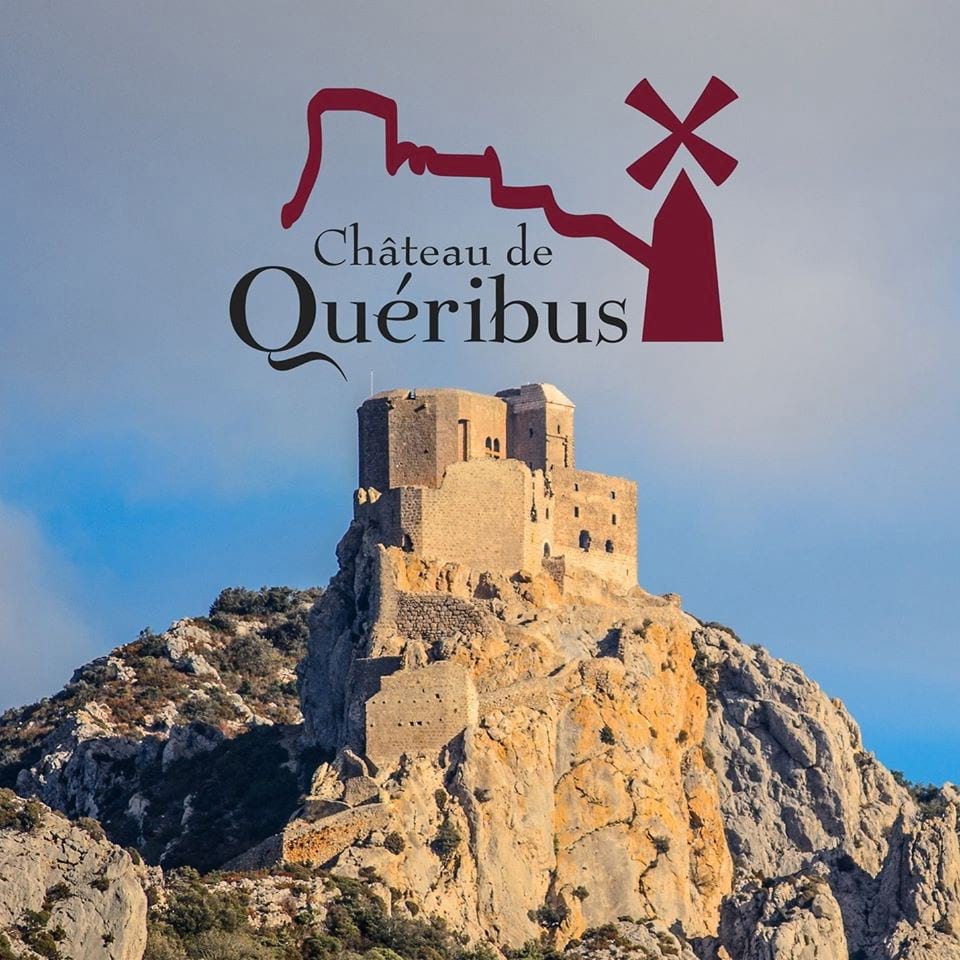
The last stronghold of the Cathar defence, it fell in 1255. A real eagle’s nest, it has overlooked the Corbieres, Fenouilledes and Plains of Roussillon for centuries, guarding the mountain pass of the Grau de Maury.
A mere 15 – 20 men were all that were required to man the castle so clever were its systems of defence. It remains to this day a monument to the dramatic events that have marked the turbulent history of this border country.
Cucugnan, between the two castles, is worth stopping off in to visit the church of St Julien with its intriguing statue of a pregnant Virgin.
Omer’s windmill, recently restored, bears witness to the importance of wheat farming before the vineyards covered the valley.
Continue on the D19 towards Peyrepertuse and Duilhac and, 5kms after the Cucugnan, over a small bridge, turn right and follow a small road winding through the vineyards for 2 kms.
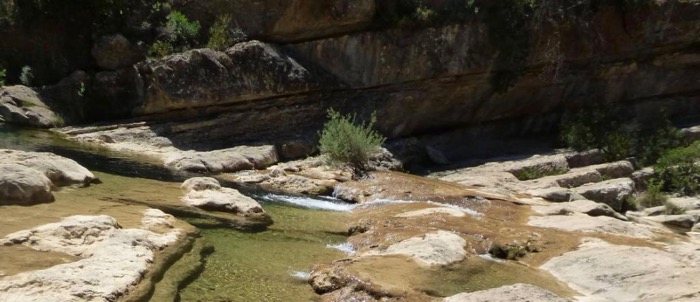
On your left a parking. Cross the river, follow the footpath behind an old ruined mill and the Cascades and Rock pools of the Gorges du Verdouble (highlight) offer one of the most beautiful natural picnic spots imaginable.
Every shade of green, sparkling waterfalls, smooth rocks, it is tempting to spend the rest of the day there but Peyrepertuse beckons. Eight hundred metres high, occupied since Roman times, the castle itself was first mentioned in 1020 when it was owned by the Catalan Counts of Besalu.
In the times of the Cathars defences a secret passage ending in a movable ladder afforded vital access. It can still be found, the last part of the climb a vertiginous cliff “voie escalade”…
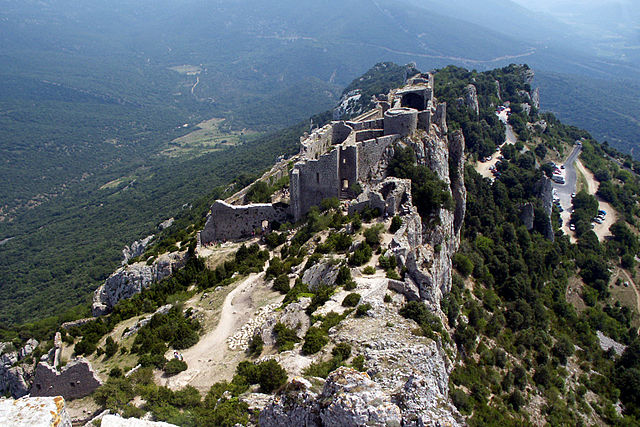
By 1258 Peyrepertuse was one of the forefront royal fortresses of the border of Aragon.
It lost its strategic importance in 1659 but remained in use till the Revolution.
Perched on its dramatic 40 metre high cliff, it appears inaccessible from the ticket office but a ¼ hours narrow(omit) shady walk through the scented box brings you to the entrance keep of St Jordi. History oozes from the ancient wall and in spring cowslips and fritillaries flower between the fallen stone.
To add to the visit, there are Falconry Displays, Re-enactments of Castle life in the Middle Ages and a Grand Medieval Festival of the Castle of Peyrepertuse during the summer months.