LES PHARMACIES EN FRANCE
BEST HEALTHCARE SYSTEM IN THE WORLD
According to the WHO (World Health Organisation, not the rock band!), France has the best healthcare system in the world and more people visit the doctor here than in any other country – and of course, doctors write prescriptions.
Chemists play a much bigger role in France than in many other countries. It’s often your first stop for health advice, minor ailments, and even some treatments.
Here’s an up-to-date guide to how French chemists work in 2026, along with useful vocabulary to help you navigate confidently.
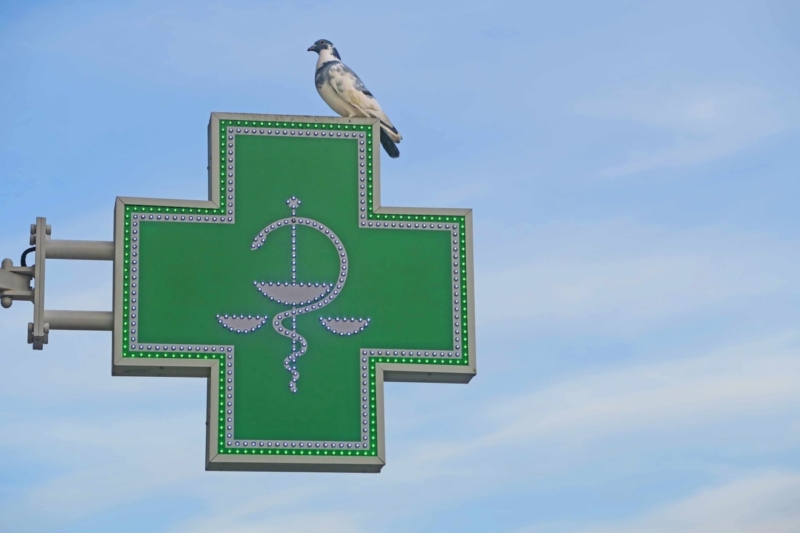
If in doubt about a health issue in France, your local pharmacist is often the fastest and most reliable place to start.In fact, ‘Pharmacie’ staff in France are highly trained, (six or seven years of university studies are required) and therefore, whilst they are not allowed to diagnose, they are an essential part of the healthcare system, generally very competent in providing advice and over the counter treatment for many common ailments. Whilst certainly not a substitute for a doctor, they can be a good place to start if you’re off colour. Do not be afraid to ask advice, describe your symptoms etc.
In many areas, especially where doctors are scarce, pharmacists are now a frontline healthcare provider.
We checked in with our local pharmacie in Maureillas to find out more about the many services offered by chemists in France alongside dispensing prescription and over-the-counter medicines.
Most pharmacies……
Advise on minor illnesses (colds, infections, allergies, etc.)
Administer vaccines (flu, COVID, and more depending on eligibility)
Provide basic health checks (blood pressure, asthma checks, test blood sugar for diabetes, sometimes screenings)
Offer guidance when doctors are unavailable
Prescribe antibiotics for certain non-serious conditions
Renew some treatments in specific cases (some might review repeat prescriptions, discuss side-effects, and general health update.
Support patients with chronic conditions
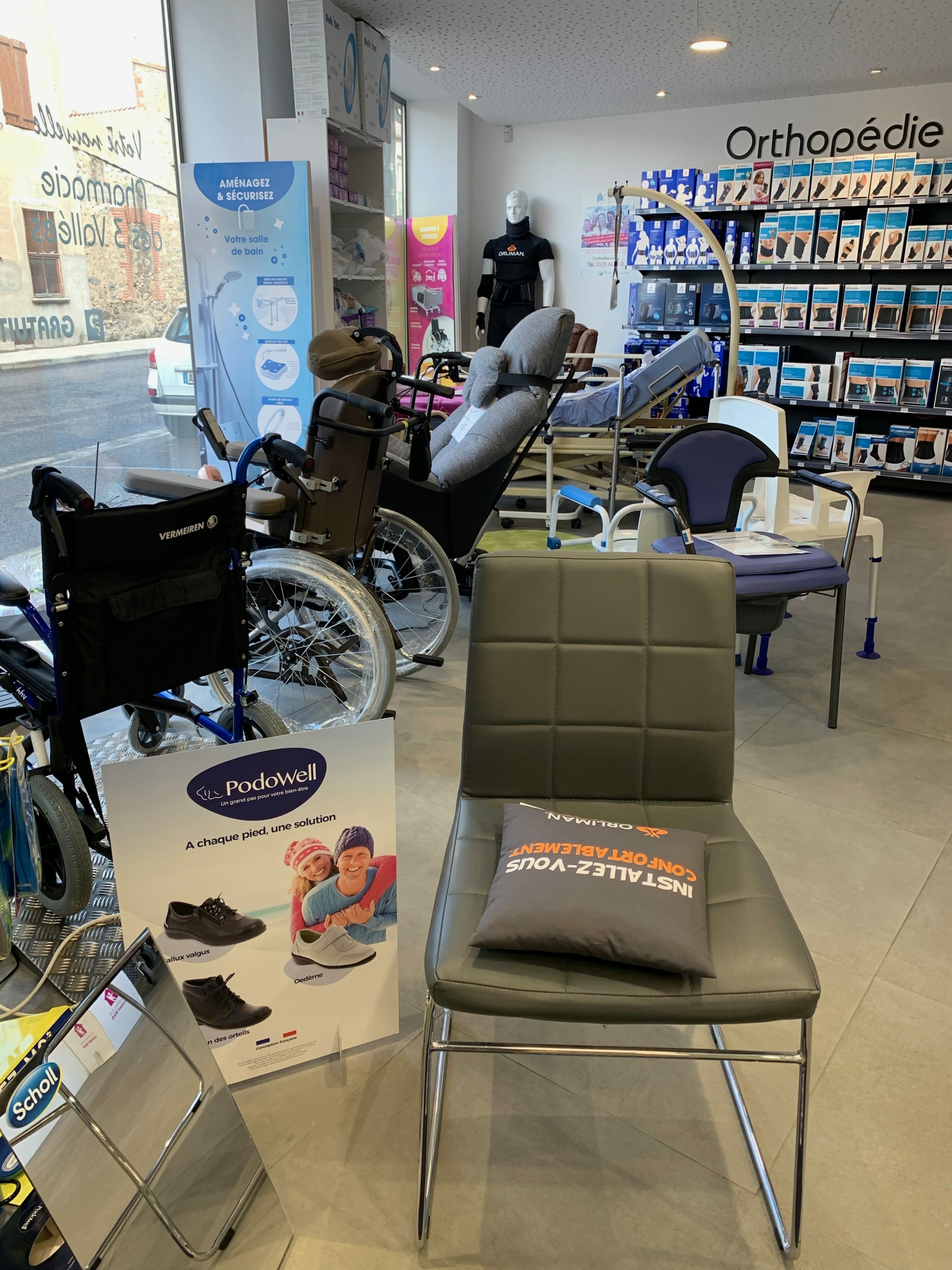
They will also advise on the edibility of mushrooms picked, sell or rent out and deliver materials such as crutches, wheelchairs, beds for the disabled, update your carte Vitale…..
Village pharmacies will usually work closely with district nurses and doctors to ensure that patients receive the right medical care.
OPEN ALL HOURS
Pharmacies open shop hours and are closed Sunday and Bank holidays. However, there will always be at least one ‘service de garde’ in each area providing out-of-hours service in case of emergency. Look for a notice in the window of any pharmacy, or ring 3237 for the local of the ‘pharmacie de garde’ nearest you.
NON PRESCRIPTION MEDICINE
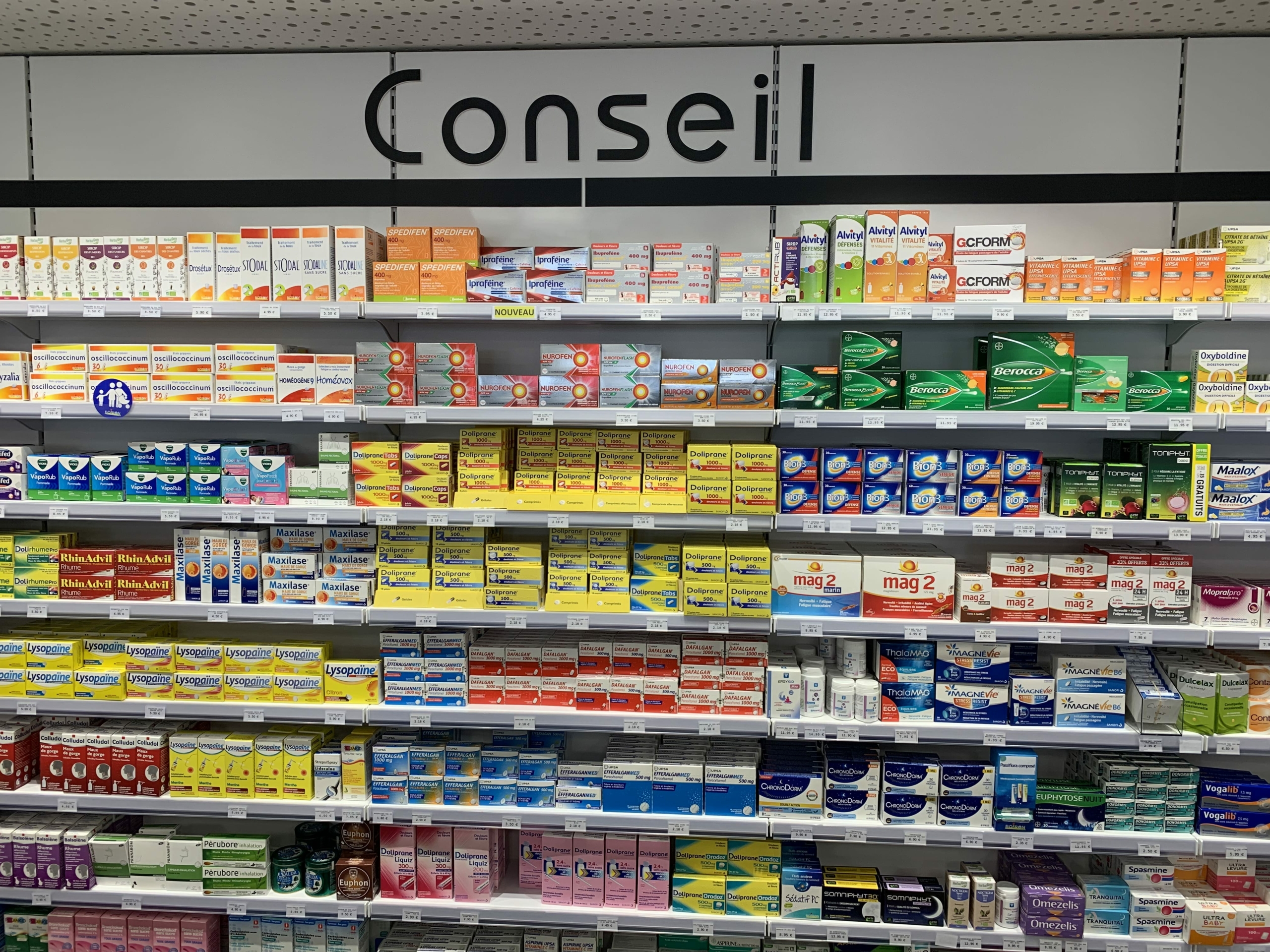
Only pharmacies are allowed to sell over-the-counter, non-prescription drugs, so you will not find paracetamol or haemorrhoid cream at your local corner shop or supermarket. There is no state reimbursement for over the counter drugs, unless they have been prescribed by a doctor.
HOMEOPATHIC REMEDIES
Many French chemists have a wide range of homeopathic remedies and pharmacists often recommend them. Bear in mind that the the effectiveness of homeopathic options is increasingly debated and reimbursement has largely been reduced or removed.
NAME DROPPING
You will often be given ‘generic’ drugs with different names, cheaper equivalent of the ‘branded’ drug you may be used to. You can ask specifically for branded drugs but you may pay more as you will only receive reimbursement at the rate for the equivalent generic drug.
LEFTOVER DRUGS
Medicine in France is dispensed by the pack, so you will often end up with much more than you need. For example, if you are prescribed a twelve-day course of antibiotics and these come in packs of ten, you will receive two packs, nearly half of which you will not use. Take your surplus drugs into your local pharmacie and they will see that that they are disposed of safely. They are no longer able to recycle.
CHECK YOUR ‘COMPLÉMENTAIRE SANTÉ’
The high standard of French healthcare and low price of prescription drugs is changing, as state contributions towards medicines are substantially reduced. This reduction will also affect the amount of reimbursement from your ‘complémentaire santé’, so this is a good time to check the conditions of your top up health policy.
AND FINALLY…..
….we can’t possibly end without mentioning the good old suppository! Used in France to cure sore throats, fevers, inflammations, and a whole range of ailments, whether they be bottom related or not, this is one French treatment that still makes the Brits go ‘oh là la’ !
Some useful vocabulary for visiting the chemist in France
Ou est la pharmacie de garde la plus proche?
Where is the nearest emergency chemist?
J’ai le nez bouché.
I’ve got a bunged up nose
I feel dizzy.
La tête me tourne
I feel sick
J’ai mal au cœur
I have been sick.
Je viens de vomir
Je ne dors pas bien
I’m not sleeping well
I have sunburn.
J’ai pris un coup de soleil
Est-ce qu’il y a un générique?
Is there a ‘cheaper alternative’?
Do you have anything for a cold/flu?
Avez-vous quelque chose contre un rhume/la grippe?
I’ve been stung by a bee/wasp
J’ai été piqué(e) par une abeille/guêpe.
Can you recommend an insect repellant?
Pouvez-vous me conseiller une crème anti-insecte?
I would like some plasters, please.
Je voudrais du sparadrap, s’il vous plaît.
I am allergic to…
j’ai une allergie contre…
It is not serious.
Ce n’est pas grave.
I feel dizzy.
La tête me tourne.
I have been sick.
Je viens de vomir.
I have stomach ache.
J’ai mal au ventre.
I have a headache.
J’ai mal à la tête.
Can you give me something for the pain?
Pouvez-vous me donner un analgésique?
Est-ce que je devrais voir un médecin?
Should I see a doctor?
I feel unwell.
Je ne me sens pas bien.
I have a temperature.
J’ai de la fièvre.
Aieeeee!
Ouch!
And split into situations….
Walking into a pharmacy
Bonjour, j’ai besoin de quelque chose pour…
→ Hello, I need something for…
…un rhume (a cold)
…une toux (a cough)
…un mal de tête (a headache)
…une allergie (an allergy)
…un mal de gorge (a sore throat)
🤒 Explaining symptoms
J’ai… (I have…)
de la fièvre (a fever)
mal à la tête (a headache)
mal à la gorge (a sore throat)
mal au ventre (a stomach ache)
Depuis combien de temps ? (They may ask: how long?)
👉 You can reply:
Depuis deux jours (for two days)
Depuis ce matin (since this morning)
💊 Asking for medicine
Vous avez quelque chose sans ordonnance ?
→ Do you have something over the counter?
Je préfère un médicament naturel.
→ I’d prefer something natural.
C’est pour un adulte / un enfant.
→ It’s for an adult / a child.
📄 Prescriptions
J’ai une ordonnance.
→ I have a prescription.
Est-ce que vous avez le générique ?
→ Do you have the generic version?
C’est remboursé ?
→ Is it reimbursed?
💉 Vaccines / services
Est-ce que vous faites les vaccins ici ?
→ Do you do vaccinations here?
Je peux faire vérifier ma tension ?
→ Can I have my blood pressure checked?
⏰ Emergencies
Y a-t-il une pharmacie de garde ?
→ Is there an emergency pharmacy?
If you’re unsure, say:
Je ne parle pas très bien français.
→ I don’t speak French very well
Most pharmacists will slow down or switch to English if they can.
I am trying to find TCP Antiseptic liquid. Do you or any chemist in Europe stock this at all. I’m finding it impossible to purchase anywhere. Thankyou.
Whilst there is no exact equivalent here are a few that are similar.
• Biseptine Solution Antiseptique: A very common over-the-counter French antiseptic solution used for minor wounds, cuts, abrasions.
• Hexomedine Transcutanée Solution: A skin antiseptic solution, good for superficial wounds etc.
• Dakin Cooper Stabilisé: A stabilized Dakin’s solution (a mild sodium-hypochlorite antiseptic) for wound care.
• Amukine 0,06% Solution Antiseptique: Another option, iodine-based antiseptic for minor skin injuries.
• Mercryl Solution Antiseptique: Traditional antiseptic solution, somewhat less frequently used but still available.
• Septivon Solution Antiseptique: Economy antiseptic solution, general use.
• Mercurochrome Solution Antiseptique Incolore: Another classic brand, colourless version (for those who dislike staining).
• Germoxid Liquide Désinfectant Peau: A higher-end liquid antiseptic for skin disinfection.
🔍 What to ask/what to check
Since TCP is quite unique (phenol + halogenated phenols) and used for both skin wounds and sometimes gargle/ulcers, when asking in a French pharmacy you might say:
“Je cherche un antiseptique liquide pour peau (coupures, écorchures)”.
If you also want something for mouth/gargle (as TCP is used): clarify “et pour gorge/ulcères buccaux” (though many French antiseptics are not indicated for gargle).
Ask the pharmacist: “Quel est l’équivalent de TCP ? Je ne trouve pas le TCP ici.” They may say there is none exact and suggest something like the brand Bétadine or one of the ones above. 
The nearest equivalent is probably Biseptine Solution Antiseptique — good all-round, widely available. If you need something for wound care specifically, and do not care about mouth/gargle, then Dakin Cooper or Amukine are good alternatives.
Info supplied by ChatGPT
I live in Maureillas so would agree pharmacies are generally very good but delays in other areas let the side down Cardiology RDV mid July